
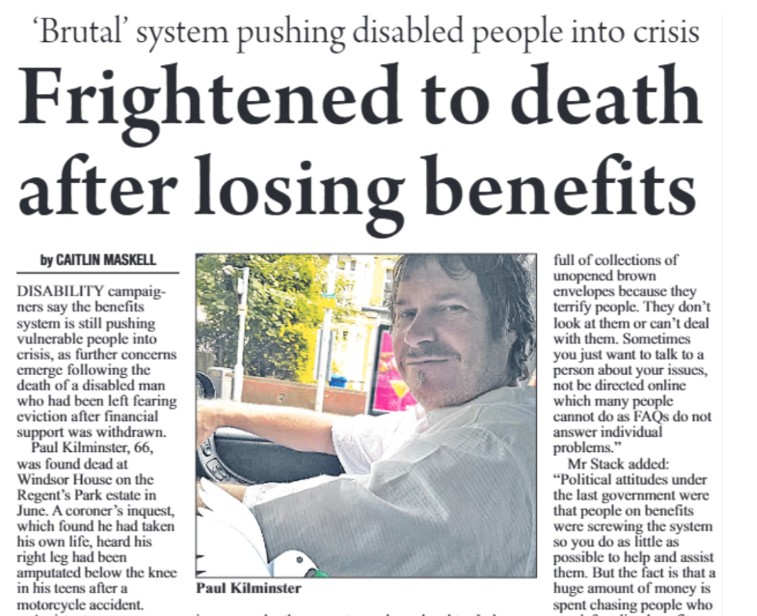
We’re sharing a Camden New Journal report quoting WinVisible, which follows on from a report about the tragic preventable death of Paul Kilminster.
Camden New Journal 18 December 2025, News p6 — by Caitlin Maskell
‘Brutal’ system pushing disabled people into crisis
“Disability campaigners say the benefits system is still pushing vulnerable people into crisis, as further concerns emerge following the death of a disabled man who had been left fearing eviction after financial support was withdrawn.
Paul Kilminster, 66, was found dead at Windsor House on the Regents Park estate in June. A coroner’s inquest, which found he had taken his own life, heard his right leg had been amputated below the knee in his teens after a motorcycle accident.
Assistant coroner Edwin Buckett said that notes found at the property showed he was “worried about being evicted, loneliness and being on benefits… He had recently had his benefits taken away and was worried”.
The Department for Work and Pensions (DWP) later confirmed to the New Journal that Mr. Kilminster’s Employment and Support Allowance (ESA) was taken away because he reached pension age. Pensioners cannot receive ESA.
Claire Glasman from the disability women’s organisation WinVisible said many disabled older people and vulnerable claimants are unable to maintain continuity of income under the current system. “People need help,” she said. “Some need support to claim the state pension, and then also pension credit if their income is too low. That’s already two things to navigate in a complicated system.
“Then you are expected to claim online and lots of people don’t have a smart phone or access to the Internet. The DWP is not helping people maintain continuity of income. They give assurances all the time but in practice they are extremely brutal especially to sick and disabled claimants. [For us] It’s all trying to fit into a system that is not tailored to our needs.”
WinVisible previously supported Joy Dove, whose daughter Jodey Whiting took her own life in 2017 after her ESA payments were stopped when she missed an assessment while in hospital with pneumonia.
“People are treated like they can manage everything and some can’t”, said Ms Glasman, adding: “It’s such a complicated system.”
Last week the DWP said: “Ensuring vulnerable customers get the support they need throughout their entire benefit journey is vital, which is why we have improved our processes.” It confirmed the introduction of the Stopping Payments guidance which states that a customer’s vulnerability must be considered before their benefit is suspended.
Pat Stack, chair of Camden Disability Action Board, said: “You hear stories of people’s houses full of collections of unopened brown envelopes because they terrify people. They don’t to look at them or can’t deal with them. Sometimes you just want to talk to a person about your issues, not be directed online which many people cannot do as FAQs do not answer individual problems.”
Mr Stack added: “Political attitudes under the last government were that people on benefits were screwing the system, so you do as little as possible to help and assist them. But the fact is that a huge amount of money is spent chasing people who are defrauding benefits but there is a much greater figure of unclaimed benefits and nobody is employed to go around making sure everyone is getting the benefits they are entitled to.” [See WinVisible’s comment below.]
A Department for Work and Pensions spokesperson said: “We understand that stopping or suspending payments can create hardship, especially for a person who is vulnerable, and we are committed to ensuring customers get the support they need throughout their entire benefit journey. That includes claimants being contacted to let them know when their ESA is due to end to ensure they know to claim their state pension.”
Look out for our Christmas Eve edition next week for a UK Disability History Month special feature.”
End of Camden New Journal article.
WinVisible adds:
- The fraud rate for PIP is officially 0% (DWP figures, May 2024). The DWP figures also mix up overpayment and fraud, which are very different. Overpayment is often their mistake.
- An estimated seven million households are missing out on £24bn of benefits and other financial help, says Policy in Practice (September 2025).
Discover more from WinVisible
Subscribe to get the latest posts sent to your email.