
In this cold weather, you may be having extra problems paying energy bills. (Also see this page about hardship grants from energy companies, and our Benefits info page).
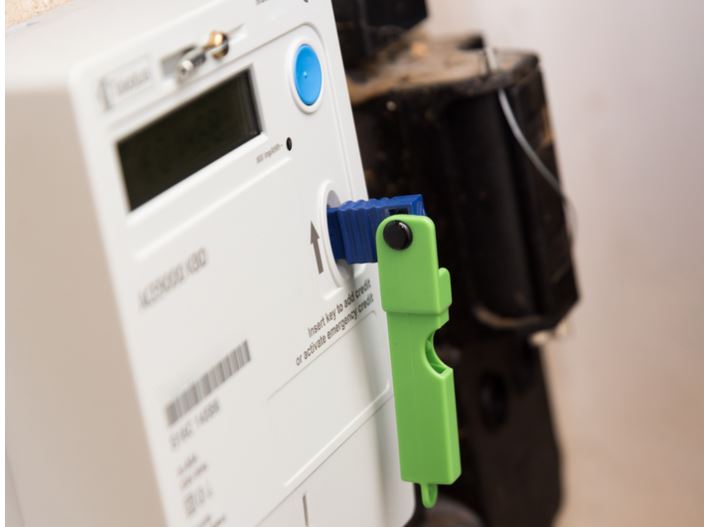
It’s important to know your rights if you are behind with bills and the energy company is threatening to install a prepayment meter by force in your home.
Around three years ago, there was a big scandal about British Gas employing a company to break into people’s homes to force-fit prepayment meters (with a court warrant). The people they violently targetted included mums and families with young children, seriously ill, sick, disabled and older people. And once the meter was put in, many people could not afford to top up the meter, or could not physically use it, and so were cut off heating, light, cooking, charging their phone or running medical equipment.
As a result of the scandal and the campaigns that followed, which we were part of, force-fitting of meters was stopped for a while. The regulator Ofgem had to introduce new rules which the energy companies have to abide by. Otherwise companies will be fined for breaking the rules. And if they do go ahead in your case, they have to put £30 credit on the meter so no one is suddenly left without heating, etc. after this has happened to you.
Here are the Ofgem rules. The full Ofgem page is here.
The illness and disability list they give is not a closed list, these are examples. You can describe how your situation fits in to that category. For example, if you have anorexia.
“Rules that suppliers must follow
Before a prepayment meter can be involuntarily installed, suppliers must:
- make at least 10 attempts to contact a customer before a prepayment meter is installed
- carry out a site welfare visit before a prepayment meter is installed WinVisible adds: it’s a good idea to have a trusted friend or family member with you for support if someone is coming to your home. But if you live on your own, explain that you live by yourself, as this can be important. This is also another chance to show them that you can’t top up the meter independently, you can’t reach it or you are sometimes too ill to get to the shop to put money on the key.
- refrain from all involuntary installations for the highest risk customers including:
- households which require a continuous supply for health reasons, including dependence on powered medical equipment
- households with an older occupant aged 75 years and over (if there is no other support in the house)
- households with children aged under 2 years old
- households with residents with severe health issues including terminal illnesses or those with a medical dependency on a warm home (for example due to illness such as emphysema, chronic bronchitis, sickle cell disease)
- where there is no one within the household that has the ability to top up the meter due to physical or mental incapacity
- assess customers who may be struggling to pay their energy bill where children under 5 years old live in the household, or people living in the household have:
- other serious medical or health conditions, for example neurological diseases such as Parkinson’s, Huntingdon’s or Cerebral palsy, nutritional issues, such as Malnutrition and mobility limiting conditions such as Osteoporosis, Muscular Dystrophy or Multiple Sclerosis
- serious mental or developmental health conditions, for example clinical depression, Alzheimer’s, Dementia, learning disabilities and difficulties or Schizophrenia
- temporary situations, such as pregnancy or bereavement
- audio or body cameras must be worn by the lead supplier representative present on all warrant installations or site welfare visits to check for vulnerabilities ahead of an involuntary installation or remote mode switch. All audio and footage will be available for audit
- give a £30 credit per meter (or equivalent non-disconnection period) on all warrant installations and remote switches as a short-term credit or measure to remove the risk of customers going off supply at the point of prepayment meter installation
- re-assess the case once a customer has repaid debts owed.
Suppliers must do certain things before they can install a prepayment meter to get back debt owed to them without a household’s permission. They can only install prepayment meters if they have been checked and confirmed that they meet all the requirements in the rules. Check energy suppliers that can install prepayment meters without household permission.
A supplier can swap your meter by getting a warrant or by remotely switching your smart meter. They can only do this after they have taken all reasonable steps to agree payment with you. It should only be a last resort in order to avoid disconnecting your supply.
A warrant can cost up to £150 and can be added onto existing debt. People who are in certain vulnerable situations will not have to pay this.
A supplier must install a smart meter when fitting a prepayment meter. They will only install a traditional meter if there are technical reasons. Read about getting a smart meter.”
End of Ofgem page.
If this has happened to you and the energy company did not follow these rules, you can complain and also claim compensation. See here.
Discover more from WinVisible
Subscribe to get the latest posts sent to your email.